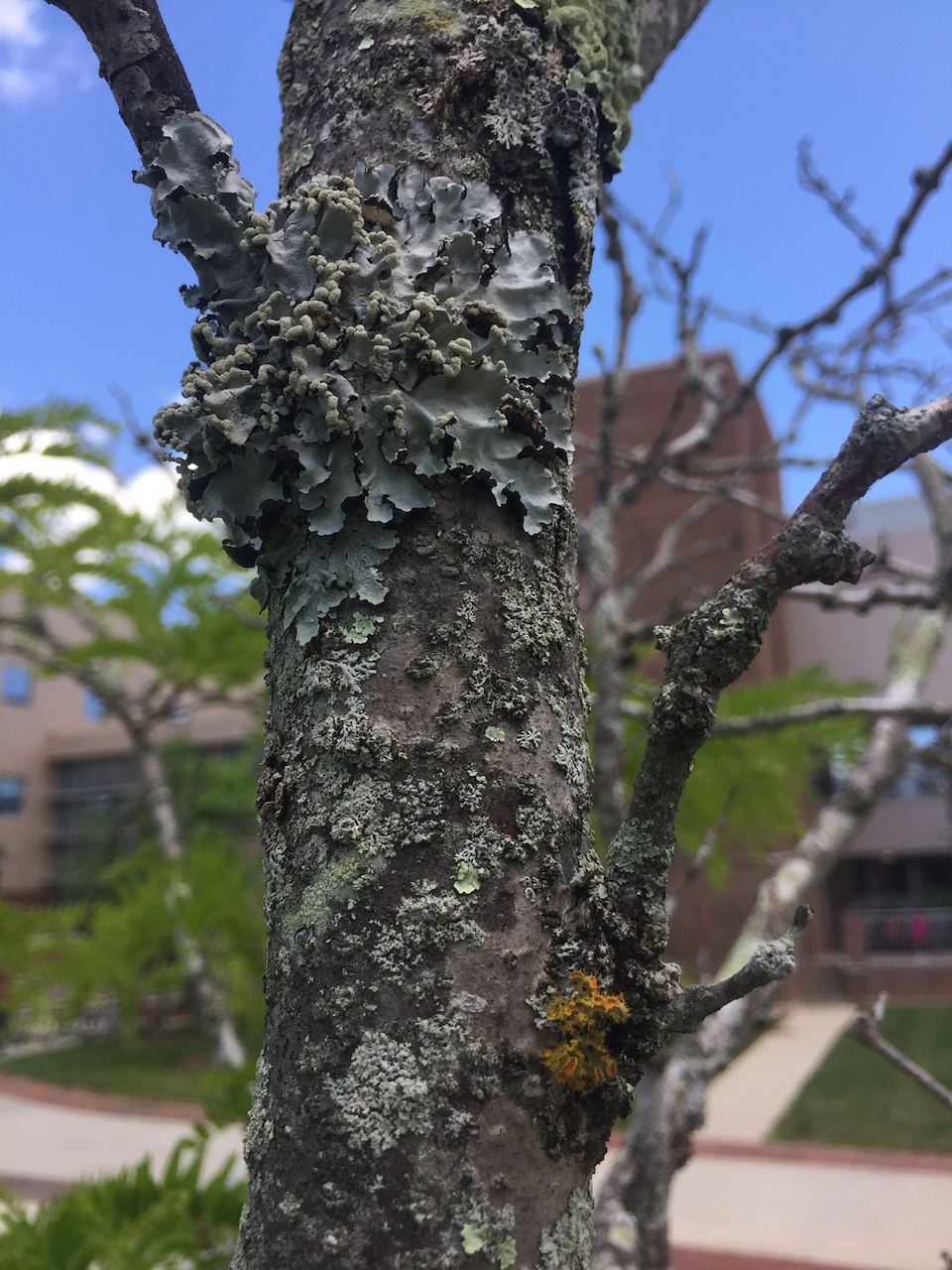
 The publication of the study revealing the presence of (re)introduced lichenized fungi in CT, based on populations present on the university campus (Frye H.A., Z. Muscavitch & B. Goffinet. 2021. Discovery of epiphytic lichens in Connecticut suggests novel introduction and reintroduction via horticultural practices. The Bryologist 124: 191–197. pdf, see post) prompted an article “Ecologists are ‘Lichen’ a Surprising New Find on Campus” in UCONN today.
Month: April 2021
Antoine Simon awarded BAEF fellowship
 Welcome back! Dr. Antoine Simon, who has visited UCONN and our lab during his MSc and Ph.D. is coming back! Antoine was awarded a fellowship from the Belgian American Education foundation to spend one year here, and further explore the evolution of lichenized fungi!
Some of the publications emerging from his recent work:
Simon A., B. Goffinet, LS. Wang, T. Spribille, T. Goward, T. Pystina, N. Semenova, N.V. Stepanov, B. Moncada, R. Lücking, N. Magain & E. Sérusiaux. 2021. Global phylogeny and taxonomic reassessment of the genus Dendriscosticta (Ascomycota: Peltigerales). Taxon (accepted, stay tuned!).
Simon A., R. Lücking, B. Moncada, J.A. Mercado-Díaz, F. Bungartz, M. Cáceres, E. Gumboski, S. Maria de Azevedo Martinsi, D. Parker & B. Goffinet. 2020. Emmanuelia, a new genus of lobarioid lichen-forming fungi (lichenized Ascomycota: Peltigerales). Plant and Fungal Systematics 65: 76–94. https://doi.org/10.35535/pfsyst-2020-0004
Simon A., J. Di Meglio, T. Goward, K. Dillman, T. Spribille & B. Goffinet. 2018. Sticta torii sp. nov., a remarkable lichen of high conservation priority from northwestern North America. Graphis Scripta 30: 105–114.
Simon A., B. Goffinet, N. Magain & E. Sérusiaux. 2018. High diversity, high insular endemism and recent origin in the lichen genus Sticta(lichenized Ascomycota, Peltigerales) in Madagascar and the Mascarene archipelago. Molecular Phylogenetics and Evolution 122: 15–28.
Spjut R., A. Simon, M. Guissard, N. Magain & E. Sérusiaux. 2020. The fruticose genera in the Ramalinaceae (Ascomycota, Lecanoromycetes): their diversity and evolutionary history. MycoKeys, 73: 1.
New publication on lichens
Frye H.A., Z. Muscavitch & B. Goffinet. 2021. Discovery of epiphytic lichens in Connecticut suggests novel introduction and reintroduction via horticultural practices. The Bryologist 124: 191–197. pdf
Abstract reads: The discovery of Teloschistes chrysophthalmus in Connecticut more than one hundred years since its last known occurrence is argued to result from human introduction. The species only occurred on the horticultural tree, Gleditsia triacanthos var. inermis, planted on the 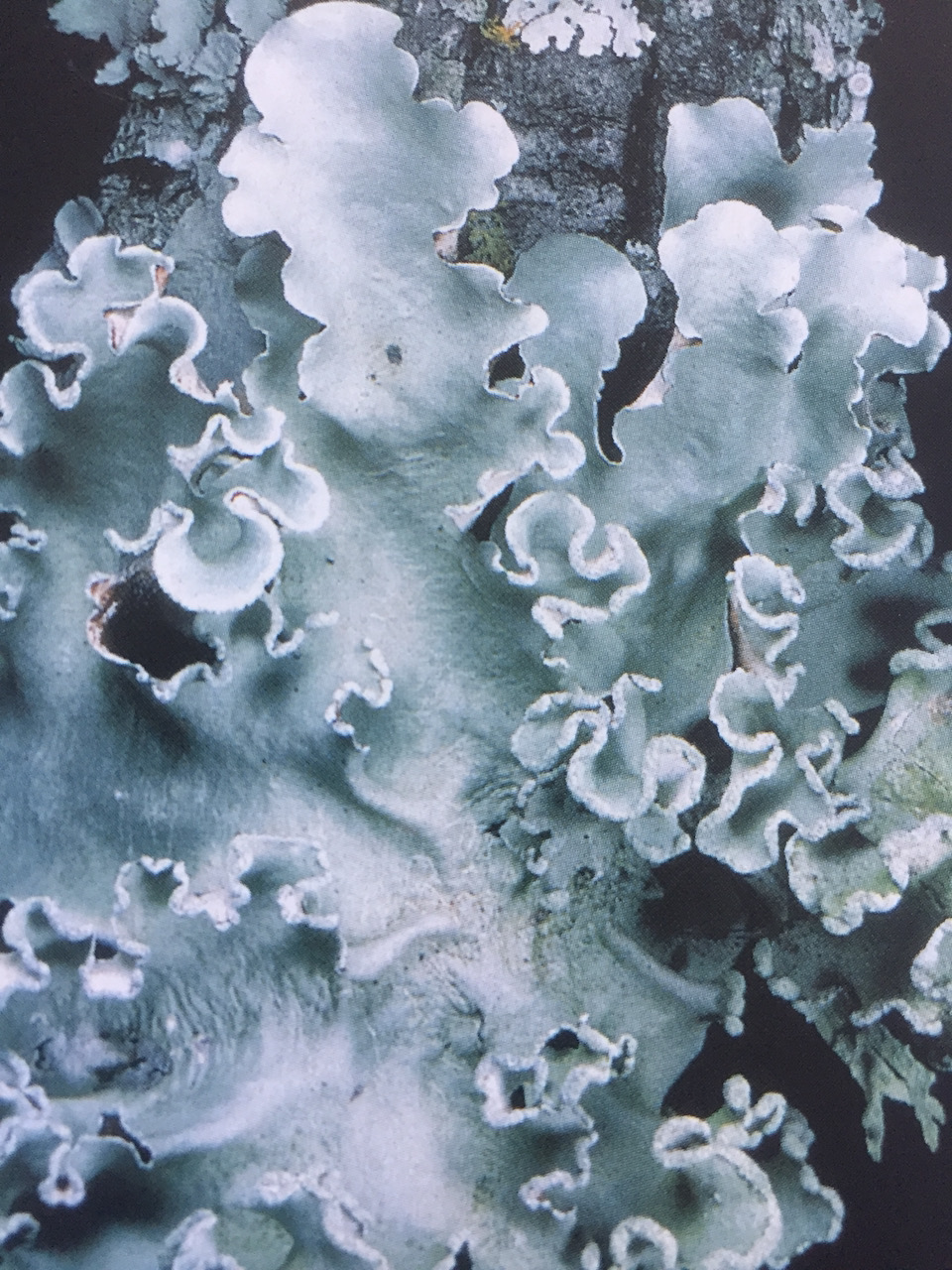 University of Connecticut campus. Gleditsia triacanthos is not indigenous to northeastern North America but is widespread in the central United States. Other epiphytic macrolichens also recorded on this phorophyte include Punctelia bolliana and Parmotrema austrosinense, both widespread in the central United States, and new to Connecticut and New England, respectively. This is likely the first reported case of combined introductions of lichenized fungi in North America through the import of ornamental trees.
Congratulations to Zach on NEAS & ASPT awards
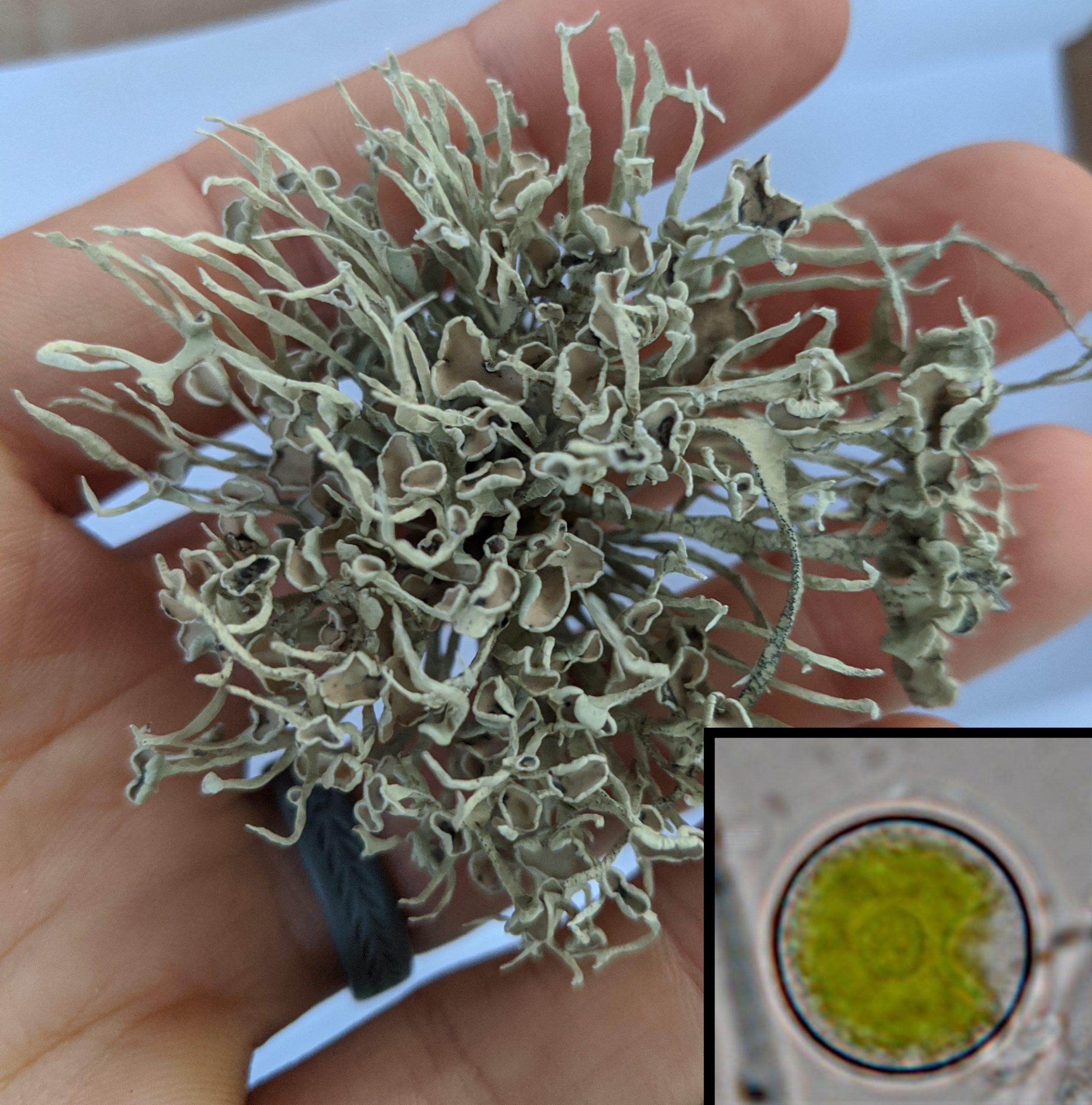 DOUBLE congratulations to Zach Muscavitch, co-advised by Drs. Louise Lewis and B. Goffinet for his recent grant of $500 from the Northeast Algal Society to explore the hidden diversity of the green algal genus Trebouxia lichenized with fungi of the Ramalinaceae, AND of $1,200 from the American Society of Plant Taxonomists to explore specificity in the association between the species of fungal symbiont (i.e., Niebla s. lat.) and its algal partner of the genus Trebouxia .
New publication on liverwort organellar genomes
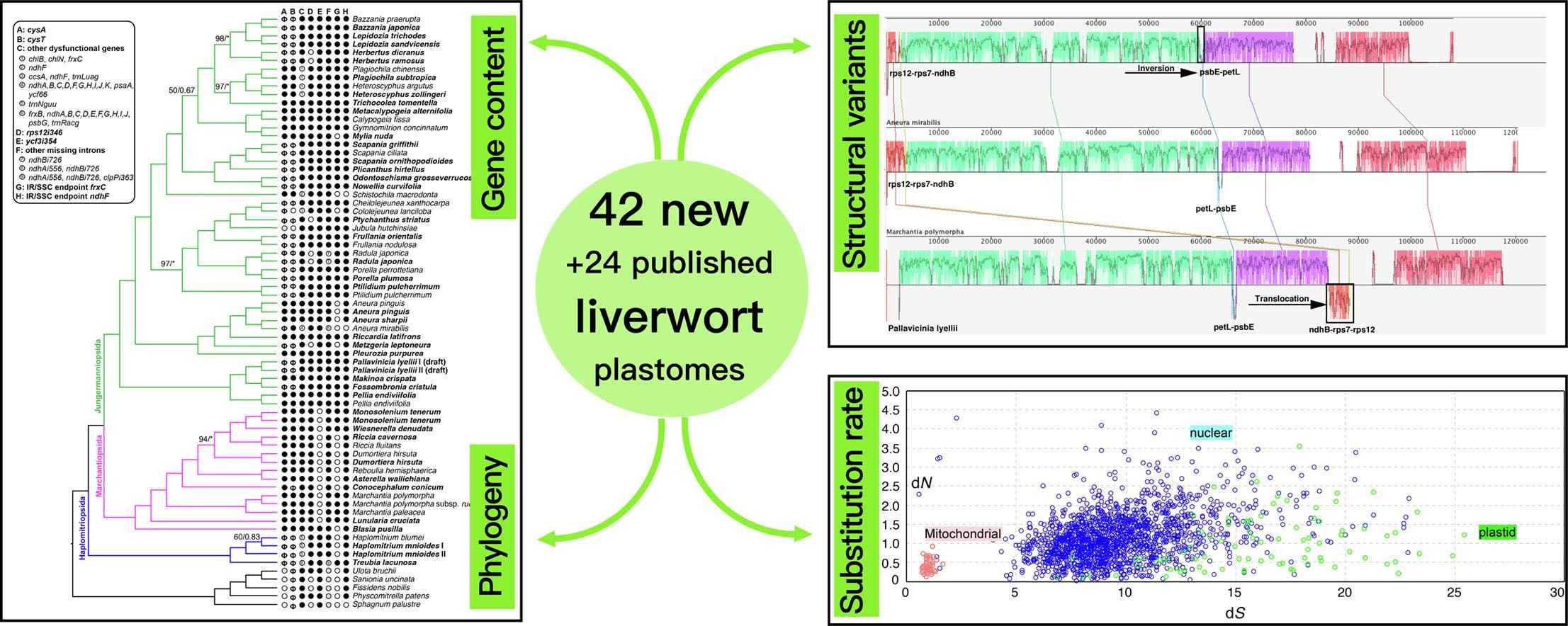 Dong S., S. Zhang, L. Zhang, H. Wu, B. Goffinet & Y. Liu. 2021. Plastid genomes and phylogenomics of the early land plant liverworts (Marchantiophyta): conserved genome structure and highest plastid substitution rates among three genetic compartments. Molecular Phylogenetics and Evolution 161: 107171. pdf Google Scholar.
Highlights
- We newly generated 42 complete liverwort plastomes spreading 13 out of 15 liverwort orders.This study confirmed the conserved structural evolution of liverwort plastomes despite characterization of two structural variants in simple thalloid liverworts, including one newly reported structural variant of Pallavicinia lyellii.
- Our plastid phylogenomic reconstruction cemented the backbone phylogeny of liverwort and consistently supported the sister relationship of Ptilidium with Porellales.
- In liverworts, plastid protein-coding genes have the highest substitution rates, they are on average 1.5-fold, 15-fold that of their nuclear, and mitochondrial counterparts.