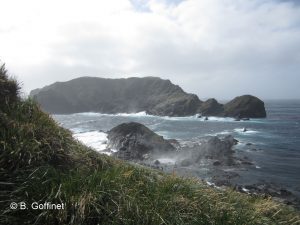
 Outcomes of our expedition of 2018 to the subantarctic Chilean island of Diego Ramirez have now been published in this issue of Anales del Instituto de la Patagonia.
Mackenzie R., O. Vidal, S. Rosenfeld, T. Contador, O. Barroso, B. Goffinet, F. Massardo, P. Arce-Johnson & R. Rozzi. 2020. Flora vascular y ausencia de especies exóticas en el archipiélago Diego Ramírez (56°31’S), Chile. Anales del Instituto de la Patagonia 48(3): 138–148. pdf
Goffinet B., J.J. Engel, M. von Konrat, R. MacKenzie, T. Contador, S. Rosenfeld, O. Barroso & R. Rozzi. 2020. Bryophyte records from Isla Gonzalo, Diego Ramirez Islands, Americas’ deep southern ocean archipelago. Anales del Instituto de la Patagonia 48(3): 127–138. pdf
Marambio J., S. Rosenfeld, J. P. Rodríguez, F. Méndez, T. Contador, R. Mackenzie, B. Goffinet, R. Rozzi & A. Mansilla. 2020. Siete nuevos registros de macroalgas para el archipiélago Diego Ramírez (56°31’S): el valor del nuevo parque marino como sumidero de carbono y conservación de la biodiversidad subantártica. Anales del Instituto de la Patagonia 48(3): 99–111. pdf
Contador T., J. Rendoll, R. Mackenzie, S. Rosenfeld, O. Barroso, R. Rozzi, B. Goffinet, J. Kennedy & P. Convey, P. 2020. Comunidades de Invertebrados Terrestres en el Archipiélago Diego Ramírez (56°, 31’s) y sus Afinidades con las Islas Sub-Antárticas del Océano Austral. Anales del Instituto de la Patagonia 48(3): 83–98. pdf
Rozzi R., R.D. Credo, T. Contador, E. Schüttler, S. Rosenfeld, R. MacKenzie, O. Barroso, E.A. Silva-Rodríguez, X. Álvarez Bustos, A. Silva, I. Ramírez, J. Mella, J. Herreros, J. Rendoll-Cárcamo, J. Marambio, J. Ojeda, F. Méndez, K.P. Moses, J. Kennedy, S. Russell, B. Goffinet, F. Aguirre, L. Sánchez-Jardón, E. Barros, R.A. Vásquez, E. Poulin, F. Squeo, J.J. Armesto, A. Mansilla & F. Massardo. 2020. Extensión de la Red de Estudios Socio-Ecológicos a Largo Plazo (LTSER-Chile) en la Reserva de la Biosfera Cabo de Hornos y el Nuevo Parque Marino Islas Diego Ramírez-Paso Drake (Extension of the long term socio-ecological research network (LTSER-Chile) in the Cape Horn Biosphere Reserve and the new marine park Diego Ramirez Islands Drake passage). Anales del Instituto de la Patagonia 48(3): 45–81. pdf
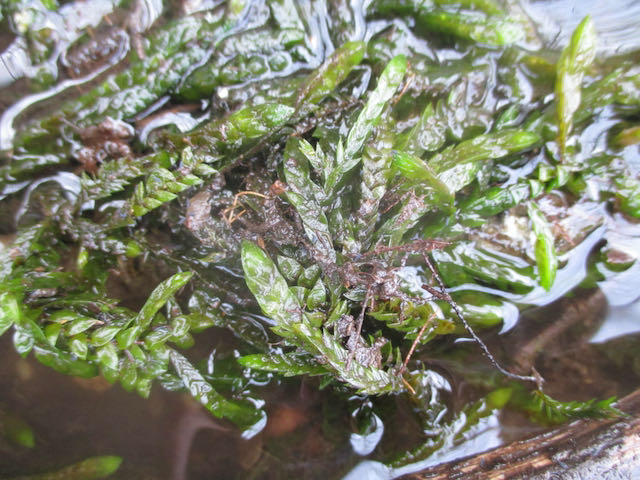 Yu J., L. Li, S. Wang, S. Dong, Z. Chen, N. Patel, B. Goffinet, H. Chen, H. Liu & Y. Liu. 2021. Draft genome of the aquatic moss Fontinalis antipyretica (Fontinalaceae, Bryophyta). Gigabyte (online November 2020). pdf